


Dental implants are a modern solution for replacing missing teeth, offering a long-lasting, natural-looking alternative to dentures and bridges. If you’re considering dental implants, understanding the process and knowing what to expect can help ease any concerns. This step-by-step guide will walk you through everything you need to know about dental implants, from the basics to the entire process, ensuring you’re well-informed as you make this important decision for your oral health
What Are Dental Implants?
Dental implants are artificial tooth roots that are placed into the jawbone to support replacement teeth. Unlike traditional dentures or bridges, which rest on the gum line, implants are anchored directly into the jaw, providing a more stable and natural-feeling solution. They are typically made from titanium, a material known for its strength and compatibility with bone.
Implants consist of three main parts:
The Crown: The visible replacement tooth that is custom-designed to match the size, shape, and color of your natural teeth.
The Implant Post: A small titanium screw that is surgically placed into the jawbone.
The Abutment: A connector piece that sits on top of the implant post and holds the replacement tooth in place.
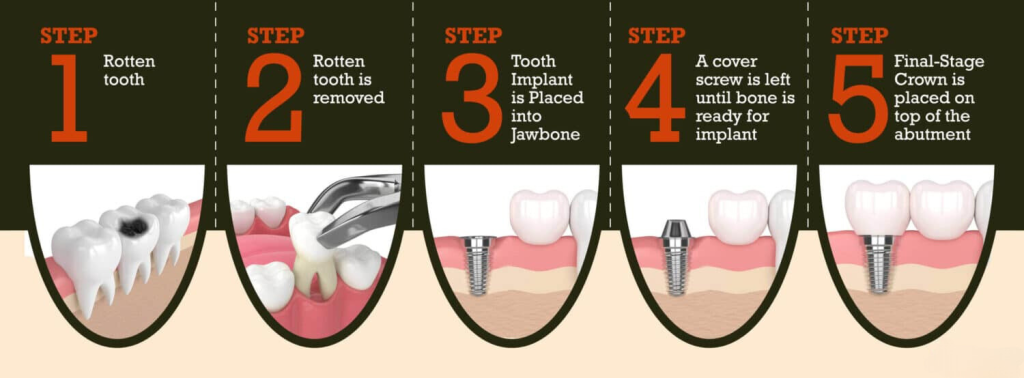
How Do Dental Implants Work?
Dental implants work by mimicking the root of a natural tooth. When the implant post is placed in the jawbone, it undergoes a process called osseointegration, where the bone fuses with the titanium implant, creating a strong and stable foundation for the crown. This process typically takes several months but results in a permanent, secure replacement for a missing tooth.
Implants provide several benefits over traditional tooth replacement methods, including:
- Durability: With proper care, dental implants can last a lifetime.
- Improved Function: Implants restore full chewing and speaking function, making them a reliable option for replacing missing teeth.
- Natural Appearance: The crown is designed to match your natural teeth, ensuring a seamless look.
Step-by-Step Process of Getting Dental Implants
Step 1: Initial Consultation
The first step in getting dental implants is a consultation with your dentist or oral surgeon. During this visit, the dentist will conduct a thorough examination of your oral health, including:
- X-rays and CT scans: To assess the condition of your jawbone and ensure that it is healthy enough to support the implant.
- Medical history review: To identify any conditions (like diabetes or osteoporosis) that might affect the healing process.
The dentist will also discuss the treatment plan, timeline, and costs involved, making sure you fully understand the process before moving forward.
Step 2: Preparing for Surgery
If you’re a good candidate for implants, the next step is to prepare for the surgery. Depending on your needs, the dentist may:
- Extract any damaged teeth: If the missing tooth is still present, it may need to be removed before the implant can be placed.
- Bone grafting: If your jawbone is too thin or weak to support the implant, a bone graft may be necessary. This involves adding bone material to the jaw to ensure there is enough volume for the implant to fuse with.
You may also be given antibiotics or a special mouth rinse to reduce the risk of infection.
Step 3: Implant Placement Surgery
The implant placement procedure is typically done under local anesthesia, but in some cases, sedation may be used for added comfort. During the surgery:
- The dentist will make a small incision in the gum tissue to expose the jawbone.
- The titanium implant post will then be carefully placed into the bone.
- The gum tissue is stitched back in place, and the area is left to heal.
The implant may take several months to fully fuse with the bone through osseointegration. During this time, the dentist will monitor your healing progress with follow-up appointments.
Step 4: Healing and Osseointegration
The healing process is one of the most critical steps in the dental implant journey. Over the course of 3 to 6 months, the implant post will integrate with the jawbone. During this time, it’s important to follow your dentist’s aftercare instructions, which may include:
- Avoiding hard or chewy foods.
- Practicing good oral hygiene to prevent infection.
- Attending follow-up visits to ensure proper healing.
You may experience some swelling or discomfort after surgery, but this typically subsides within a few days.
Step 5: Attaching the Abutment
Once the implant has fully fused with the bone, the next step is attaching the abutment. This is a small piece that connects the implant post to the crown. The dentist will make a small incision in the gum tissue to expose the implant, and the abutment will be attached to the post. The gum tissue will then be closed around the abutment.
In some cases, the abutment may be placed at the same time as the implant, depending on the individual’s healing progress.
Step 6: Creating and Placing the Crown
After the abutment has been placed and the gums have healed, the final step is the creation and placement of the crown. Your dentist will take impressions of your teeth to ensure that the new crown fits perfectly and matches the appearance of your natural teeth. The crown will be custom-designed and fabricated in a dental lab, taking about 2 to 3 weeks.
Once ready, the crown will be securely attached to the abutment, completing the dental implant process. The result is a fully restored tooth that looks, feels, and functions just like your natural teeth.
What to Expect After the Procedure
After your dental implant procedure, there are a few things to keep in mind:
- Mild discomfort or swelling: It’s normal to experience some discomfort after surgery, but this should improve within a few days.
- Diet restrictions: You may need to stick to soft foods for a few weeks to avoid putting pressure on the healing area.
- Regular check-ups: Follow-up visits are essential to ensure that the implant and surrounding tissues are healing properly.
Maintaining excellent oral hygiene is also crucial to the long-term success of your implant. Brushing twice a day, flossing daily, and attending regular dental check-ups will keep your implant in optimal condition.
Benefits of Dental Implants
Dental implants offer numerous benefits:
- Long-lasting: With proper care, dental implants can last a lifetime, unlike bridges or dentures that need to be replaced over time.
- Better function: Implants function just like natural teeth, allowing you to eat, speak, and smile with confidence.
- Preserves jawbone: Since the implant is anchored in the jawbone, it helps prevent bone loss, which can occur when teeth are missing.
Conclusion
Dental implants are a safe and effective solution for replacing missing teeth, offering both aesthetic and functional benefits. While the process can take several months, the results are well worth the investment in your oral health. If you’re considering dental implants, consult with a skilled dentist to discuss your options and develop a personalized treatment plan. With proper care, dental implants can restore your smile and improve your quality of life for years to come.
4o mini
